
长城
Australian govt to increase fines for data breaches_我的网站

A |
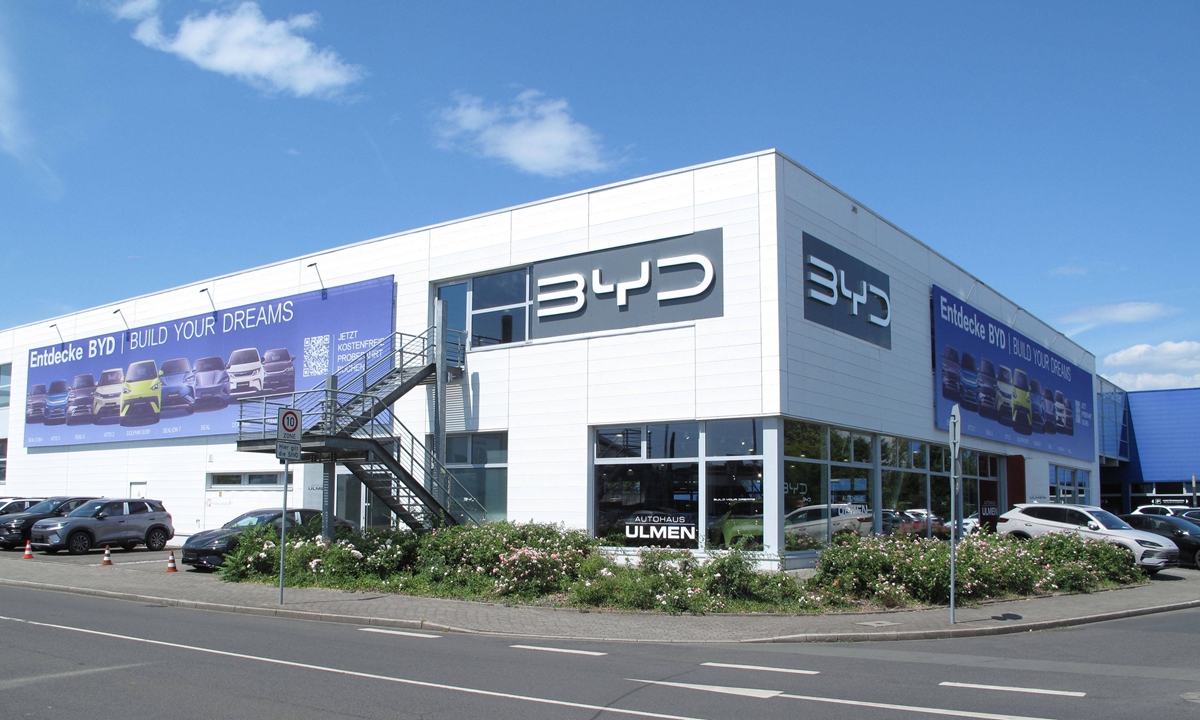
Germany's industrial woes have increasingly become a hot topic of discussion. The latest Engineer Monitor report from professional association Verein Deutscher Ingenieure and the German Economic Institute offers a new look at the issue.
The report showed that there were 58,392 unemployed individuals in the engineering and information technology (IT) professions in the fourth quarter of 2025, the highest level since the survey began in 2011.
Compared with the previous year, the number of unemployed increased by 16.7 percent, according to German media reports on Sunday.
These figures lay bare the challenges confronting the country's manufacturing sector. The reasons for the industrial woes are multiple. The soaring energy costs caused by geopolitical conflicts, the decline in exports caused by rising protectionism and low external demand, and the structural pain caused by industrial chain restructuring are all squeezing the space of German manufacturing.
Manufacturing is the backbone of Germany's economy, and engineers and IT specialists constitute the core force that sustains this pillar. For decades, the country's reputation for "Made in Germany" excellence was built on the expertise of these skilled professionals. Regardless of the macroeconomic ups and downs, preserving the stability and continuity of its industrial talent pool represents a strategic bottom line for Germany.
Should large numbers of highly skilled technical professionals leave the industry or sit idle, industrial research and development (R&D) and production cycles will be disrupted. Over the longer term, such a waste of human capital will erode Germany's industrial innovation capacity and, ultimately, undermine the foundations of its global competitiveness.
In this context, the urgent task for Germany is to create sufficient quality positions for its technical talent. Should it fail to do so in the short term, then Germany needs to embrace a more open‑minded development approach. Shoring up its manufacturing base cannot be achieved solely through protecting domestic companies; it also requires a significant expansion of effective investment to create enough high‑quality jobs that can attract and retain skilled talent.
This is exactly where China‑Germany cooperation could deliver tangible results. According to the FDI Report 2025 published by Germany Trade & Invest (GTAI), the total number of foreign investment projects in Germany fell 9.3 percent overall to 1,564 in 2025. Nonetheless, Chinese companies became the largest source of foreign investment projects in Germany in 2025, overtaking the US for the first time since 2017.
Chinese companies launched 228 investment projects in Germany in 2025, up 14.6 percent year-on-year. More than one in five Chinese investment projects involved production and R&D activities, above the overall average for foreign investment projects in Germany. This is a sign that Chinese firms are deepening their integration into the local industrial base, according to GTAI.
Observers noted the trend, pointing out that China is becoming an important force in driving German re‑industrialization. In industries where Germany urgently needs to rebuild its competitive edge, such as electric vehicles, batteries, energy technology, digital manufacturing, and automation, China is emerging as an increasingly significant complementary partner. In these critical areas that will determine industrial competitiveness in the coming decades, the relationship between China and Germany is not merely one of rivalry; there are clear and substantial complementarities. Germany still boasts world‑leading engineering expertise, precision manufacturing capabilities, and a strategic location at the heart of the European market.
China has complete and highly integrated supply chains for raw materials and intermediate goods and large capacity for increasing production. When Chinese automakers set up R&D centers in Germany, or when Chinese tech firms collaborate with German factories to build smart production lines, the beneficiaries are not only the Chinese companies but also the German engineers who would otherwise face redundancy.
Cross‑border investment cannot flourish without a sound policy environment. Chinese companies are apparently willing to develop in Germany, but it can only happen on the premise that the German side provides a fair, reasonable and predictable business environment, reduces non-market interference in commercial activities, and allows capital to operate in accordance with market rules.
If the two countries are able to reach a deeper level of cooperation in investment, many of Germany's trade‑related concerns may well find more pragmatic solutions. The deep integration of industrial value chains would facilitate two‑way trade, creating renewed momentum for German exports of machinery, vehicles, chemicals, and other competitive products to China.
。 Canberra, Oct 22 (UNI) Australian companies that fail to protect customers' data will face fines worth tens of millions of dollars under new laws proposed by the government.
Attorney-General Mark Dreyfus said on Saturday that he would introduce legislation to Parliament that will increase the maximum fines for serious or repeated data breaches from the current limit of 2.2 million Australian dollars (1.3 million US dollars).
Under the changes, the maximum penalty will become whichever is highest 50 million Australian dollars (31.7 million US dollars), 30 per cent of a company's turnover in the relevant period, or three times the value of any financial benefit obtained through the misuse of data.
It comes after a series of high-profile data breaches in Australia.
Telecommunications giant Optus in September disclosed a major cyber attack that compromised the data of approximately 10 million current and former customers.
On October 13, health insurance provider Medibank revealed hackers stole 200 gigabytes of data including details of customers' medical procedures.
"When Australians are asked to hand over their personal data they have a right to expect it will be protected," Dreyfus said on Saturday.
"Unfortunately, significant privacy breaches in recent weeks have shown existing safeguards are inadequate. It's not enough for a penalty for a major data breach to be seen as the cost of doing business."
The Optus and Medibank breaches have been referred to the Australian Federal Police (AFP), Australian Cyber Security Center, and Australian Signals Directorate for investigation.
If passed by Parliament, the amendments to the Privacy Act would also give the national information commissioner greater powers to resolve data breaches.
UNI/XINHUA PRT。

B |
Current article:http://jz2bbzr.rangnehongranlinren.bond/news/20260826_369.html
Published on:00:06:18
上一篇:Bangladesh reminds SL of its loan
下一篇:R. Kelly Slapped With 30-Year Prison Sentence Over Sex Trafficking, Racketeering Charges
下一篇:R. Kelly Slapped With 30-Year Prison Sentence Over Sex Trafficking, Racketeering Charges
 Google Pixel 11 Pro 评测
 新西兰总理宣布:这周三首访这个国家……
 青年说|湿地听鸥鸣 青春护生态
 县领导开展巡河及调研工作
 梅洛尼谈特朗普:错付了
 SK海力士披露下一代HBM内存先进封装技术,引入英特尔EMIB
我的网站最新内容
- ·Lululemon 7折优惠、牛车水七夕庆祝活动、九鲜5.9新币套餐
- ·美官员:约40艘油轮21日晚通过霍尔木兹海峡
- ·新的亚洲之光?伊朗飞翼捍卫亚洲足球,或36岁登陆西班牙
- ·GS25, '민음사 빵' 10만개 판매…"텍스트힙 트렌드 맞춰 협업"
- ·全球首批“杭州产”抗癌新药获批上市
- ·大连钢珠求救鸭去世了 原因是……
- ·美加未谈拢 美国:加征50%关税!
- ·温州销售员梅潇文:从碰壁到自立,体彩公益助残点照亮我的求职路
- ·第十四届海峡青年荟集中阶段活动回眸
- ·首次曝光!我军试射“黑色”导弹,测试其极限性能
- ·首发2nm M6芯片!苹果全新Mac mini发布:6999元起
- ·45分钟,室温降到-269℃ 杭州造的“超级冰箱”可以量产了
- ·【フィギュア】マリニンの〝惨敗原因〟 元選手の祖父が吐露「彼らは彼を窮地に追い込んだんだ」
- ·小米商城:新地小游戏机因生产能力不足而逃票,Booker补偿20元代金券
- ·老卡续命 RTX 2080 Super显存翻倍至16GB:帧率暴增28%!
- ·厚度仅0.14毫米,钒钛基板“瘦身增值”
我的网站热点内容
- ·自由市场仅剩21位球员:大鱼2条!即战力5位!边缘人物14位!
- ·黄总理:冀年轻国人找到自己的出路 充分发挥潜力
- ·Braverman quits, adds to turmoil for UK PM
- ·华硕宣布 3 款 Wi-Fi 8 无线路由器“很快上市”
- ·特斯拉FSD新能力曝光:自动驾驶开始拥有“用户模型”,AI司机千人千面
- ·航司购票新增“超售让座,立减50” 真能解决超售难题吗?
- ·“大的要来了”:小米玄戒芯片新进展今天公布,消息称预计会同步官宣首款新机
- ·小鹏G7/日产奇骏·荣誉真心等 2025年第27周(6.30-7.6)新车预告
- ·炎炎烈日送清凉
- ·SEO已死?别慌!先搞清楚GEO和SEO到底差在哪?
- ·仅16分钟!王曼昱复出战横扫埃及老将
- ·【异动】硅铁一看空商品期权合约大涨88%
- ·‘모의고사 문항 거래’ 일타강사 현우진 1심 무죄…“사적 채무 이행”
- ·国家统计局:1—7月份我国投资新动能增势良好
- ·AMD Zen4锐龙7000补丁正式开启AVX-512指令集
- ·这一类人,不让进医院?